POM (Acetal) Engineering Plastic Compounds: Properties & Applications
Low friction, high stiffness and excellent dimensional stability make POM one of the most reliable choices for precision moving parts.
What Is POM?
Polyoxymethylene (POM), commonly called acetal, is a highly crystalline engineering plastic known for its low friction coefficient, high stiffness, excellent fatigue resistance and outstanding dimensional stability, making it a frequent replacement for machined metal parts.
Homopolymer vs Copolymer POM
POM homopolymer offers slightly higher strength and stiffness, while POM copolymer offers better chemical resistance, thermal stability and more consistent long-term performance - the right choice depends on the operating environment and load requirements of the part.
Why It Replaces Metal in Moving Parts
POM's natural lubricity means gears, bushings and slides made from it often run without additional lubrication, reducing maintenance and noise compared to metal counterparts, while also being significantly lighter.
Typical Applications
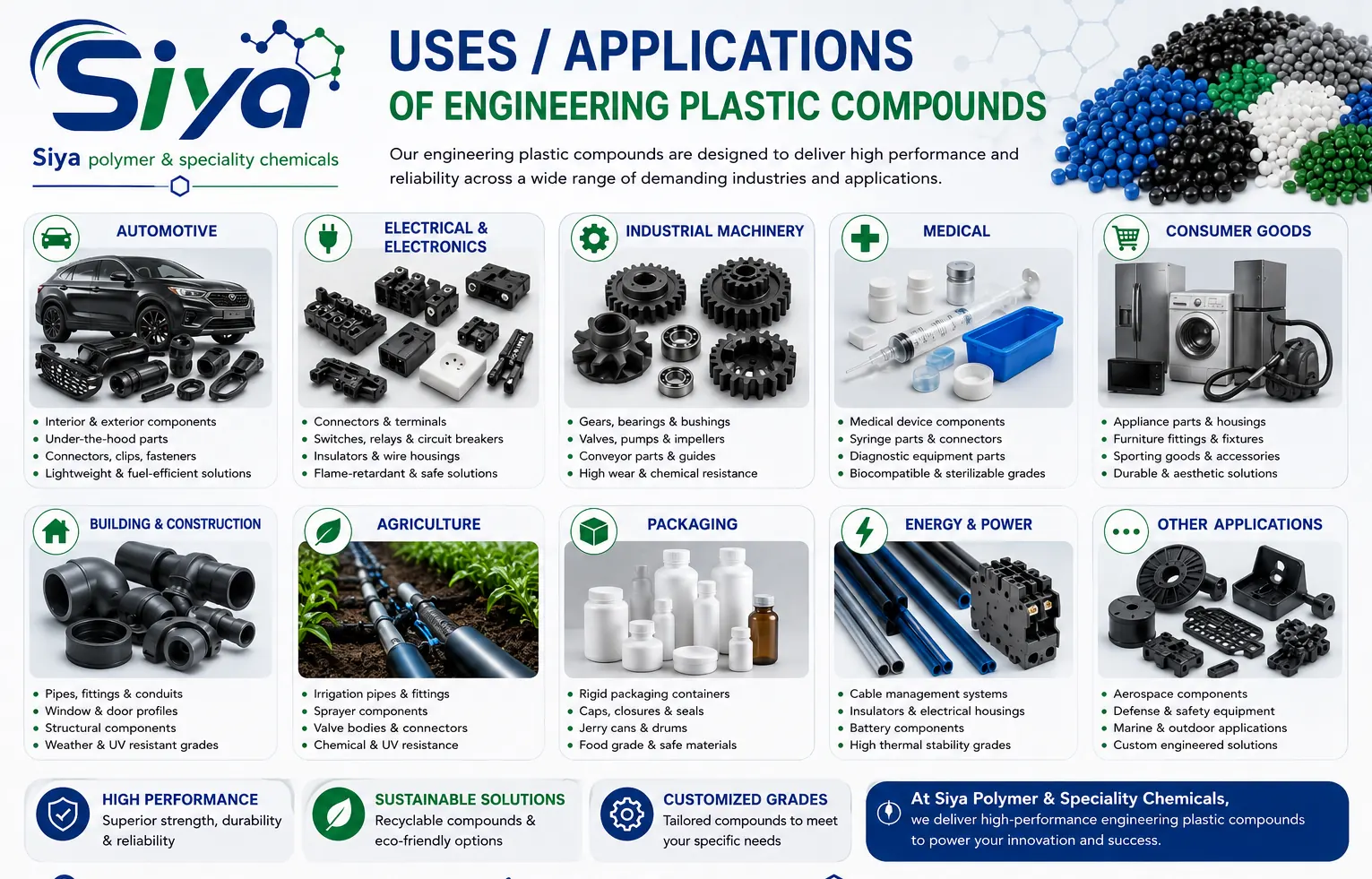
POM is widely used for precision gears, conveyor components, plumbing fittings, zippers, electronic connectors, and automotive fuel system and seatbelt components where tight tolerances and low friction are essential.
Get the right POM homopolymer or copolymer grade for your gear, bushing or connector application from Siya Polymer.
View Engineering Plastics →