What Are Impact Modifier Additives?
Impact modifier additives are specialized polymer additives used to improve the impact strength, toughness, flexibility, and durability of plastics. These additives help plastic materials absorb shock and resist cracking, especially in PVC compounds, engineering plastics, automotive parts, construction materials, and industrial plastic applications. Common impact modifiers include Acrylic Impact Modifiers (AIM), MBS, CPE, ABS, and EVA-based modifiers.
How Do Impact Modifiers Improve PVC Strength?
Impact modifiers improve PVC strength by increasing the material's ability to absorb energy during sudden impacts. They create a flexible microstructure within rigid PVC compounds, reducing brittleness and preventing cracks or fractures. This makes PVC products more durable, weather-resistant, and suitable for demanding applications such as PVC pipes, window profiles, fittings, and electrical conduits.
Which Impact Modifier Is Best for PVC Pipes?
Acrylic Impact Modifiers (AIM) are widely considered the best impact modifiers for PVC pipes due to their excellent weather resistance, long-term durability, UV stability, and superior impact performance. For underground and pressure pipe applications, acrylic impact modifiers provide enhanced toughness while maintaining pipe strength and dimensional stability.
What Are the Benefits of Acrylic Impact Modifiers?
Acrylic Impact Modifiers offer multiple benefits including high impact strength, excellent weatherability, UV resistance, improved surface finish, long service life, and enhanced processing performance. They are commonly used in PVC pipes, PVC profiles, siding, fencing, construction products, and outdoor plastic applications where long-term durability is essential.
Why Use Impact Modifiers in Plastic Manufacturing?
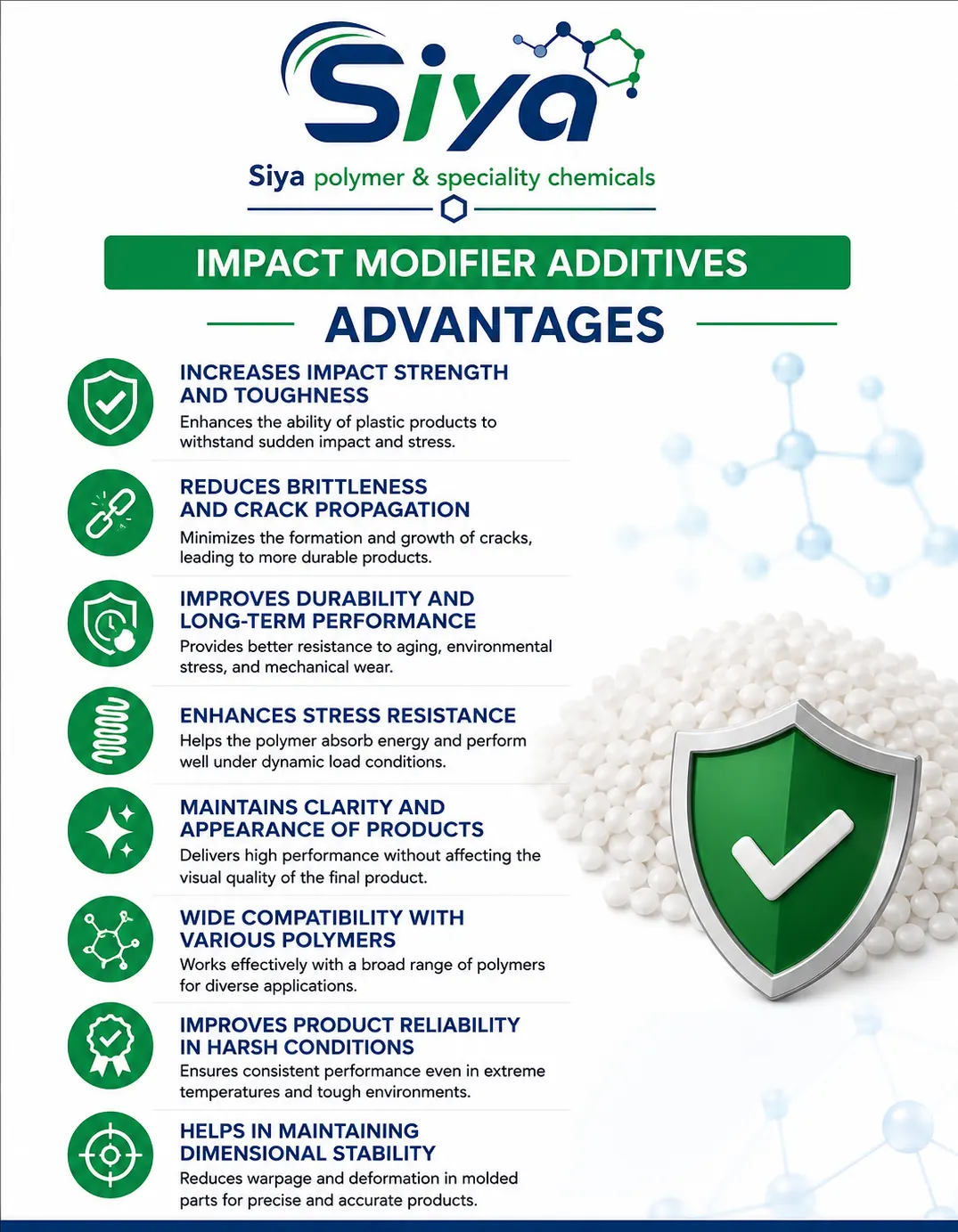
Impact modifiers are used in plastic manufacturing to improve toughness, reduce brittleness, increase product lifespan, and enhance performance under mechanical stress. They help manufacturers produce stronger and more reliable plastic products for automotive, construction, packaging, electrical, and industrial markets while maintaining processing efficiency.
What Is the Difference Between an Impact Modifier and a Processing Aid?
An impact modifier primarily improves impact resistance, toughness, and durability of plastic products, whereas a processing aid improves melt flow, fusion, extrusion efficiency, and manufacturing performance during processing. While both additives enhance PVC compounds, they serve different functions in plastic formulation and production.
How Do Impact Modifiers Increase Plastic Durability?
Impact modifiers increase plastic durability by distributing impact forces throughout the polymer matrix and reducing stress concentration points. This prevents cracking, chipping, and breakage, resulting in longer-lasting plastic products capable of performing in harsh environmental and industrial conditions.
What Are the Main Applications of PVC Impact Modifiers?
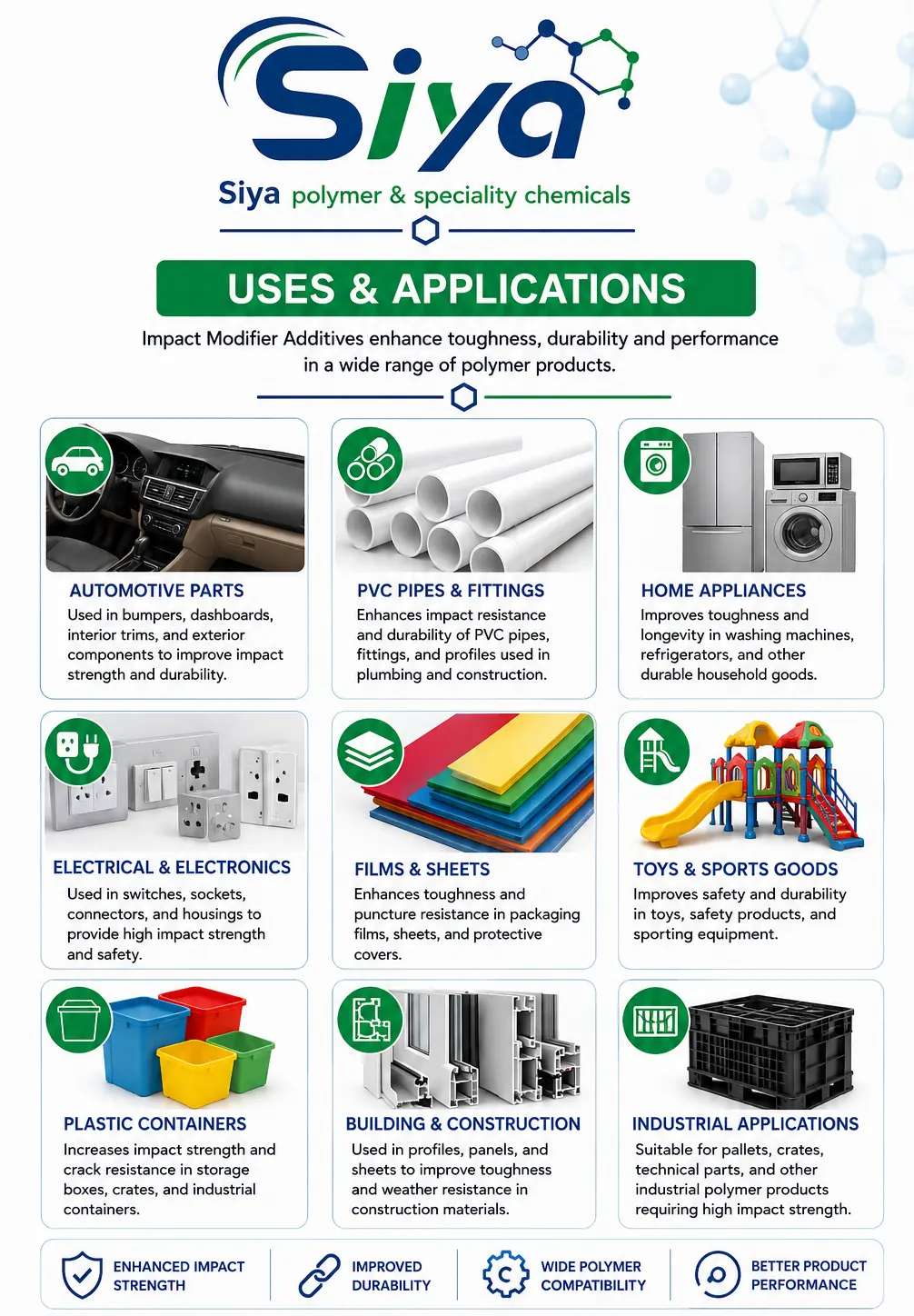
PVC impact modifiers are widely used in PVC pipes, pipe fittings, window profiles, doors, siding, cable ducts, electrical conduits, roofing sheets, fences, industrial panels, and construction materials. They improve toughness, weather resistance, and long-term performance in both indoor and outdoor applications.
What Are the Different Types of Impact Modifier Additives?
The major types of impact modifier additives include Acrylic Impact Modifiers (AIM), MBS Impact Modifiers, Chlorinated Polyethylene (CPE), ABS-based modifiers, EVA modifiers, and TPE modifiers. The selection depends on the plastic resin, processing conditions, required impact performance, weather resistance, and end-use application.
Which Impact Modifier Additives Are Best for Industrial Plastics?
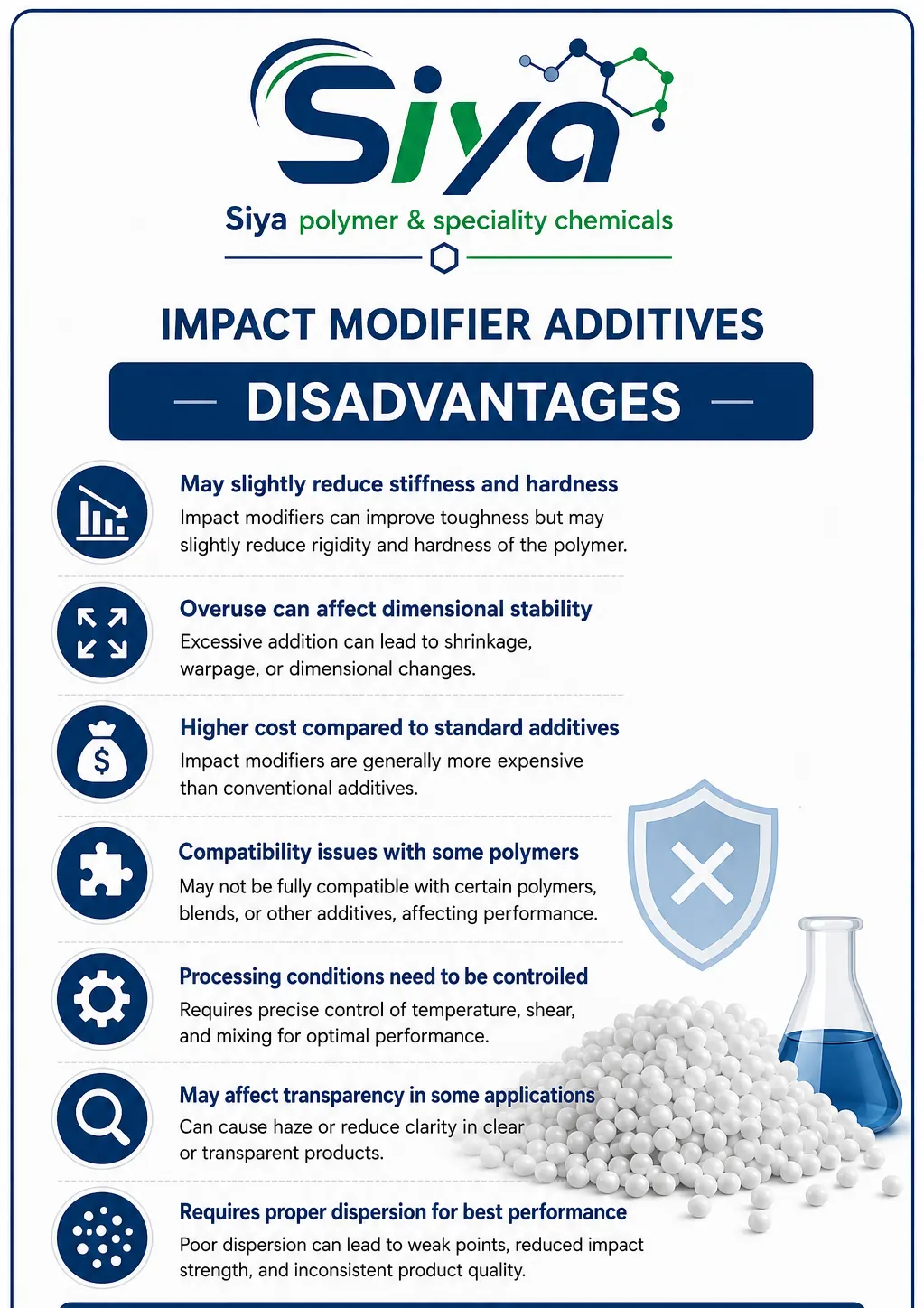
For industrial plastics, Acrylic Impact Modifiers, CPE, MBS, and advanced engineering plastic impact modifiers are commonly used. These additives improve toughness, chemical resistance, dimensional stability, and impact performance in automotive components, industrial equipment, electrical housings, engineering compounds, and high-performance plastic products.